
Retail Reimagined
A data-driven approach to optimizing in-store layout using segmentation and A/B testing.
PythonPandasA/B TestingVisualizationExperimental Design
Project Brief
National chip sales were underperforming due to limited insights into customer behavior and lack of evidence-based strategy for in-store layout. This project aimed to uncover key customer segments and validate layout changes using statistical experimentation.
Goal
Understand consumer preferences and behaviors, design an experiment to test store layout changes, and drive measurable sales uplift through data-backed decisions.
Tools & Technologies
- Python: Data cleaning, transformation with Pandas & NumPy
- Seaborn & Matplotlib: Visualizing trends
- SciPy: Welch’s T-Test for statistical testing
- Manual Uplift Testing: Trial vs Control setup using store correlation
- GitHub: Version control & documentation
- Jupyter + Canva: Report preparation for stakeholders
What I Did
- Phase 1 – Behavioral Analysis: Cleaned 250K+ rows of customer & transaction data, segmented users, extracted features, and visualized insights.
- Phase 2 – Experimentation: Designed uplift test, paired stores using pre-trial trend correlation, and validated impact using Welch’s T-Test.
Results & Insights
- Identified young singles/couples as high-value customers with 20% higher spend.
- Found clear preferences for mid-sized pack sizes (150–175g).
- Executed uplift testing with +40.28% and +49.66% increase in 2 trial stores.
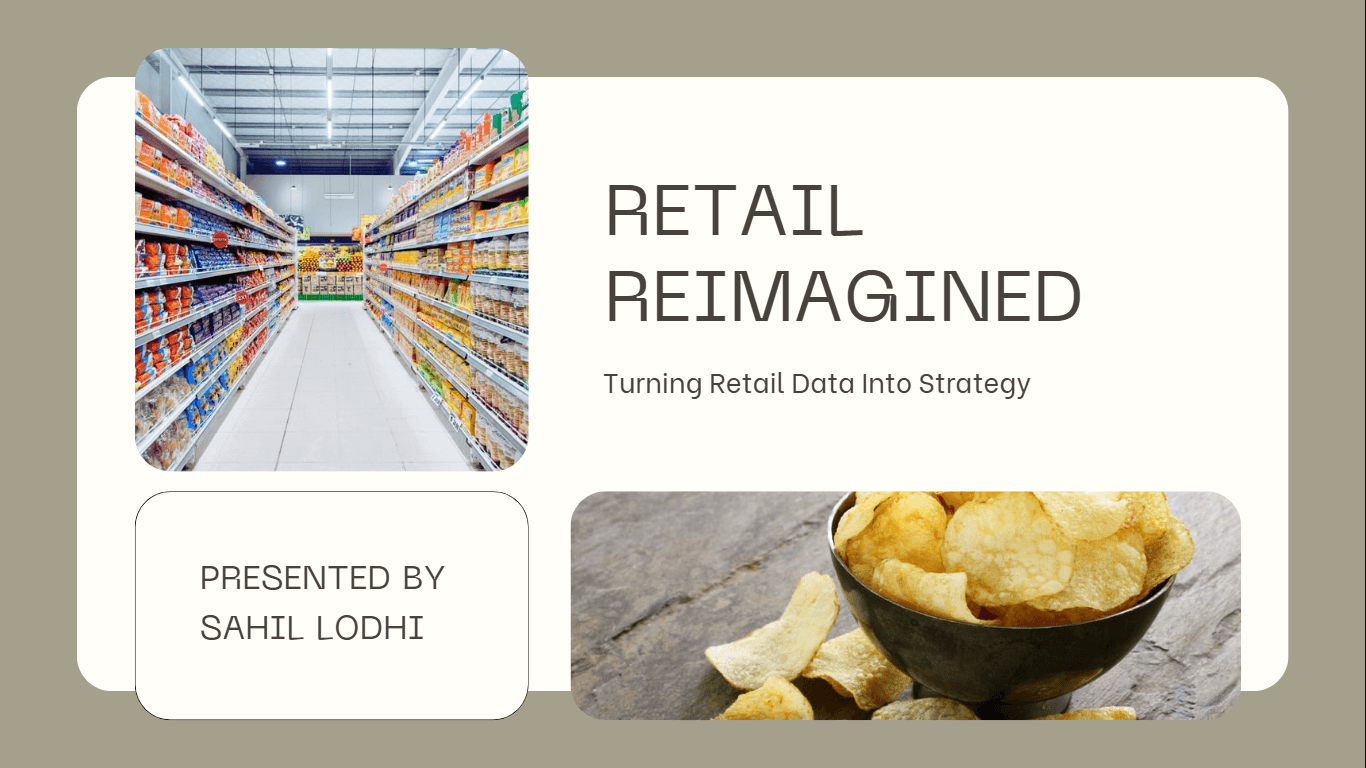
- Presented insights in a polished stakeholder presentation.

Let's Work together!
Built with ❤️ using a template by Bettina Sosa